Ultrasonic Thickness Testing
We measure the remaining thickness of steel in tanks, confined spaces and submerged structures. A caged drone or a remotely operated underwater vehicle takes the probe to the steel, so nobody has to reach each test point.
What it solves
Ultrasonic thickness testing is an established non destructive test. It measures how much material is left without cutting into or damaging the structure.
The measurement itself is usually simple. Getting someone to the right spot is the hard part. Large tanks, enclosed chambers, high steelwork and submerged structures can need scaffolding, rope access, a confined space entry team or commercial divers before testing can start. That adds cost, disruption and risk.
We send a remotely operated platform to the test location instead. You get targeted thickness readings with far less of that access work.
Applications
Tanks and enclosed structures are where it helps most. Reaching the inside walls or roof of a large tank can take more effort than the inspection, especially where readings are needed at height. Typical work includes:
- Industrial storage tanks and process vessels
- Steel silos and enclosed chambers
- Internal tank walls, roofs and structural parts
- Steelwork inside a plant that people cannot easily reach
- Confined spaces where entry is restricted
Under water, it suits steel that has been immersed for years, where corrosion and loss are hard to judge by eye: submerged steel structures, tanks, marine structures and steel piles.
Close visual inspection and thickness readings together are most useful when you are looking into suspected corrosion, assessing local deterioration, or taking readings for an ongoing condition monitoring programme.
On site
Accuracy
A UT reading measures thickness at the point tested. Whether a reading can be taken depends on the material, its surface, access, and holding the probe in good contact. Heavy corrosion, rough surfaces and some coatings can affect it and may need local preparation first. Under water, poor visibility or heavy fouling may need preparation or a different approach.
Visual inspection finds what can be seen: corrosion, coating failure, deformation. UT gives thickness at the tested points. Neither is a full structural assessment on its own, and we report them as separate datasets.
Platform and sensor
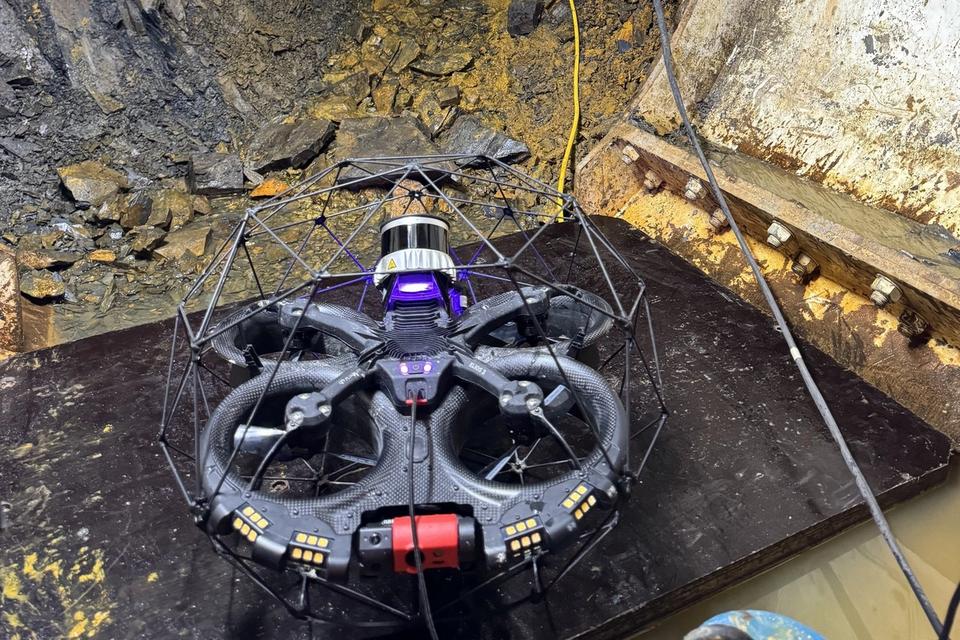
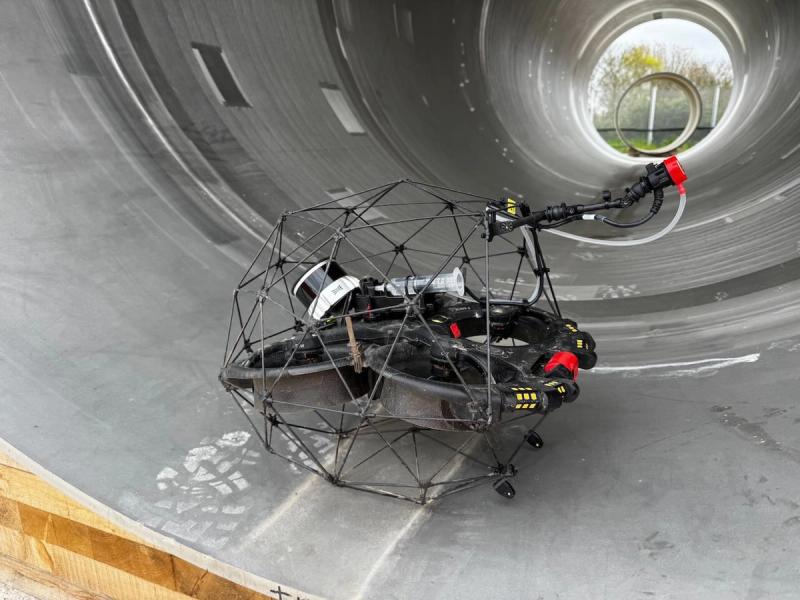
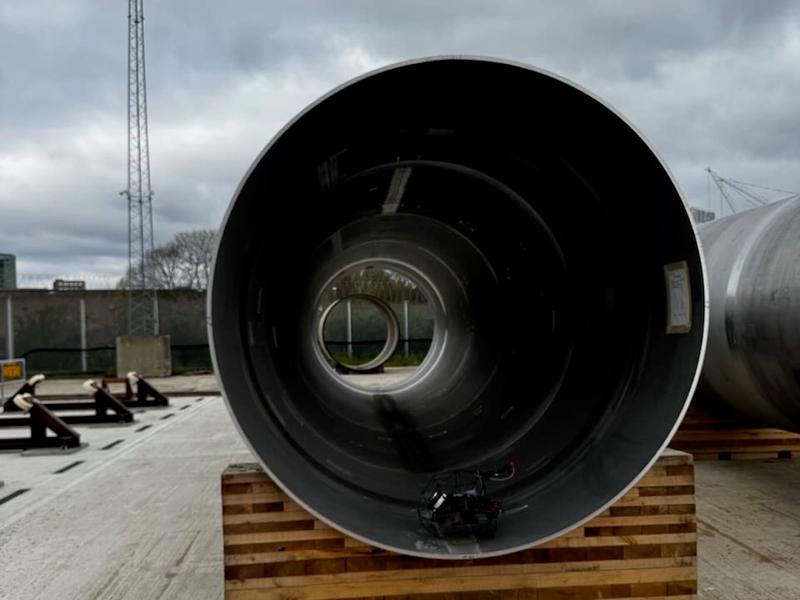
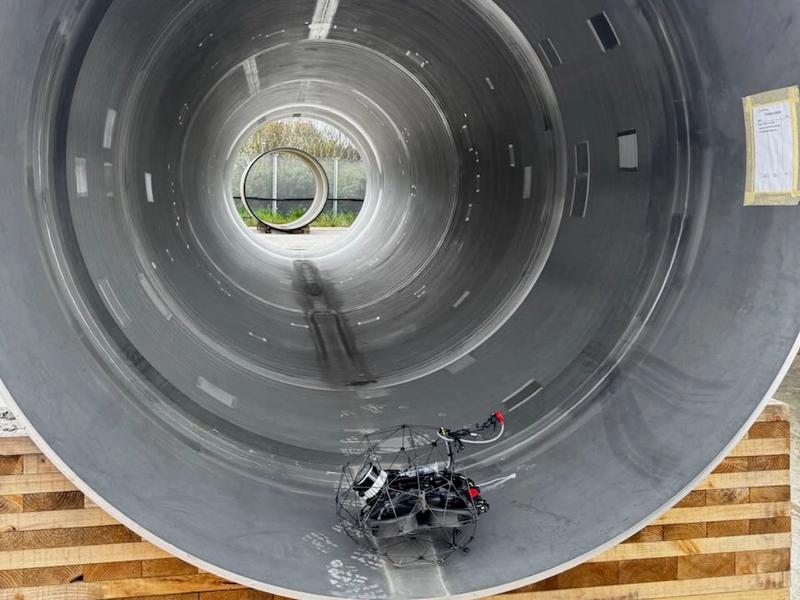
Inside tanks and confined spaces we fly the Flyability Elios 3. It is built for enclosed spaces: a protective cage, its own lighting, an inspection camera and LiDAR based positioning. Fitted with an ultrasonic thickness payload, it touches the probe to suitable surfaces and takes a reading where a technician would otherwise have to climb. It suits structures with limited access, a lot of height or complicated internal shapes.
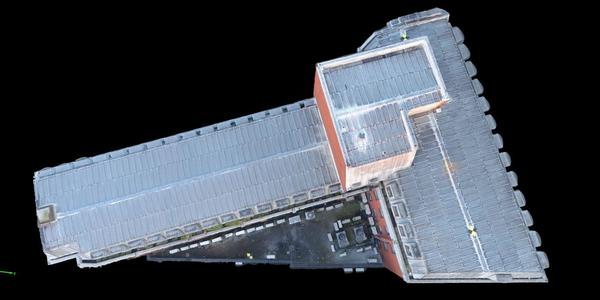
A visual drone inspection shows you the surface. Adding UT gives you a number for the steel that is left, so you can investigate suspected corrosion rather than judge it by eye. The Elios 3 records imagery and LiDAR on the same flight, which places each reading on the structure.
Under water we use an ROV carrying the UT equipment. It holds the probe against the structure while its cameras let the operator check the surface and pick good test points, so a diver does not have to reach every location. Between the two, we can cover a structure above and below the waterline.
How the job runs
What we need from you to start
Tell us what the asset is, what it is made of, and where you need readings. Send any drawings and previous inspection records you have, and tell us about access, entry rules and whether the asset will be in service. Say what the readings are for and what you need back, and we will tell you whether the drone, the ROV or a conventional method suits it best.
Questions we get asked
Can you test inside a tank without anyone going in?
What materials can drone UT measure?
Can it measure through coatings?
Can you do UT under water?
Does UT find corrosion?
Does drone UT replace conventional NDT?
Often bought with: Confined Space Inspection & Mapping · Engineering & Asset Inspection · Hydrographic & Water Survey
Sectors that use it: Utilities & Water
Send us the site.
You get a fixed quote within one working day, from the surveyor who would fly it.